
This post originally appeared on Murder Is Everywhere.
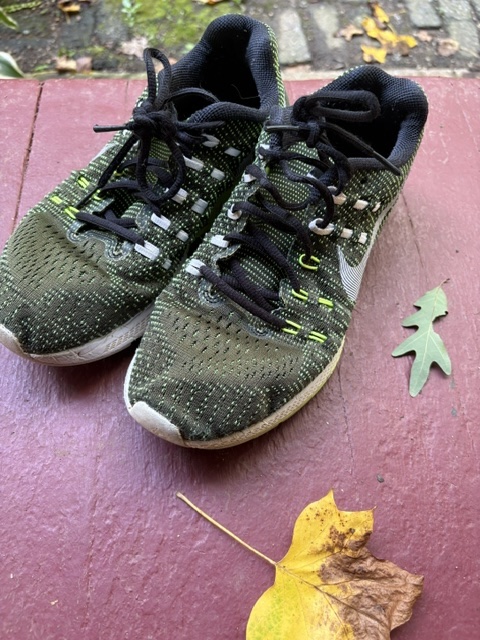
Have you ever watched or run a marathon? I had the good fortune of living for a while in a Minneapolis neighborhood on the route for participants of the Medtronic Twin Cities Marathon, which happens in early autumn every year. We gathered along the street, cheering on everyone with shouts of “doing great,” “running strong” and “you got this!”: not just to the fleet-footed, but also the hundreds of marathoners who were walking.
Strong runners can do the 26.2 miles in four to five and a half hours—really great ones, even shorter. How dashing they look in every sense of the word. The last quarter of the marathon crew contained a lot of walk-runners and simply walkers, either taking part of the race slow—or all of it. The walkers can take between eight and thirteen hours, a wide range which makes sense to me due to variations in pace. When I walk, I never know how long I’ll take. I slow down when the sidewalk has an incline or I see hazards. I speed up downhill. My pace varies according to whether I’m daydreaming or chatting with a friend or listening to an audiobook.
Hang in there, OK? This isn’t actually a post about athletics.
I’ve sometimes heard the process of book writing as being like a marathon. It’s a simile that describes the very long route from research, synopsis and rough draft,to pre-submission revisions; then the first revision in response to an editor’s letter; potentially another go-round; and don’t forget working through a tedious line edit, and then multiple copy edit and proofing experiences that make me loathe what I’ve created.
This happens all the time in traditional publishing, whether or not you’re a slow or fast worker.
Adding to the stress is managing such a marathon while writing a book fast. Publishers often want writers of commercial fiction with multi-book contracts to deliver a book a year (meaning, you write a new manuscript while editing and promoting a different book submitted the previous year). I had 12- and 14-month deadlines in the first half of my career, when I was a young woman. You and your agent usually have choice in the matter by suggesting a delivery date, but sometimes publishers are insistent you deliver a particular month each year in order to fill a rigid schedule filled with many authors’ books. It’s admirable to meet deadlines, and it puts you in the top quarter, probably, of the writing pack—at least in terms of publication frequency.
So, as a new writer, I was committed to making deadlines. I also remember the tension in my body, my shortness of temper, the discipline of scheduling an entire morning, every day, to writing; finding caregivers so that I could be out of the house, away from children who might interrupt. The challenge of parenting and writing is one reason many women finish their first novel after kids are done with high school.
But back to my go-go years. I drank a lot of coffee in the morning and wine at night, and I was thinner than I am now. I wrote faster and got an hour at the gym a lot of days to unwind. It helped that my mysteries that were set in the present-day, in my natural speaking voice. The settings were known to me, and I could sprinkle in current events, popular music, and fashion that I liked. But still—I never felt like I could stop moving. I remember reading stories to my children at night, but not playing with them the way I had expected.
Things changed when we moved from Baltimore to Minneapolis in 2006. My contract for Rei Shimura mysteries with HarperCollins ended shortly after I arrived; a seismic shock after ten years with them. It took a little exploration before my agent found a publisher, Severn House, to bring out the tenth book. I was writing more slowly in a new environment, but there wasn’t a particular rush from anyone to get my work. I wrote one last Rei book, number eleven, and then I slowed down to think. I decided to treat the year like the sabbaticals I remember my university professor father enjoying during his long career. I read a lot, I studied Hindi days a week at the University of Minnesota, and I threw myself into activities with my children and their school, made friends at the gym, and enjoyed family time with my parents, who were in good health and living nearby. I had stepped more into an ordinary life, and writing came second.
And this is what I mean about my writing being like a walking marathon. I vary my daily mileage. Sometimes it takes ages for the right idea to come, or for a book to take shape from some confused early chapters, or for my agent to find the book a publishing home.
In 2012, a full 15 years after my first book was published, I left Minnesota and returned to Baltimore with the excitement of reuniting with old friends and being closer to the publishing world, but there were hardships. I contracted Lyme disease, not knowing it for quite a while, and that turned writing into a bizarre exercise of not being able to remember the story that I was writing. And then we endured a family tragedy; the loss of our beloved daughter during the pandemic. I was still writing, but I was limping along. I wished I had never signed up for the marathon.
Fortunately, my agent was able to land me a place in a less-pressurized publishing environment. Fewer books published per year meant more flexibility about publication dates. More than once, my first editor at Soho Press, Juliet Grames, has said to me “books take as long as they need.” And I’ve also learned that editors in such environments take longer with their work, too.
For me, having a book come out every two or three years, versus every year, has brought a lot of strong emotions. Sometimes I feel grief that I’m not in my reader’s lives as much as I used to be. Will someone who doesn’t publish an installment of the series yearly be forgotten? Perhaps—but fortunately, those are choices I’ll never know about it.
I do understand that by writing books at a walking-marathoner’s pace, I can take the time to slow down and look at what’s on the sidelines. Just over there, by that nice red brick library, I might find a fascinating path of research that distracts me, but ultimately brings something new to the book. Or further on the route, I can wrestle have a conversation with someone that leads to a changed idea—and feel free to try it out.
And with this slower pace—writing one to two hours a day, usually just a half hour at a time, with breaks—I can allow myself to feel “done” and not like a shirker. I smugly power down my laptop to head out for a gym class. I can cook all afternoon or go out with a friend for lunch and a museum. I can also travel, not only for research, but to do things like eat crêpes really made in France or walk along the Mediterranean.
For me, writing and traveling is complicated. The hardest place away from home for me to write has been India because it’s got so much to do, and I want to be out exploring. The easiest place where I’ve holed up to write was in Rockport, Maine, and that was partly because I sent my husband out with the car every day , and I Zoomed in with other writers for daily writing sprints.
Yes, it’s called a sprint—we write for 25 minutes with no camera, and then there’s a five minute webinar chat with only the host being on camera. Very low stakes. And everyone cheers for everyone, no matter how much or little was produced.
On the days I’m not scheduled for an hourly sprint in one of my online communities, I take care to start at 7:30 or 8. I’d rather be done with writing by 10 in the morning and spend the rest of the day feeling relaxed.
I don’t know why a population as sedentary as writers find it so easy to use the language of runners. The fact is, we need more movement. But if it’s a long distance, I’m glad to walk.